
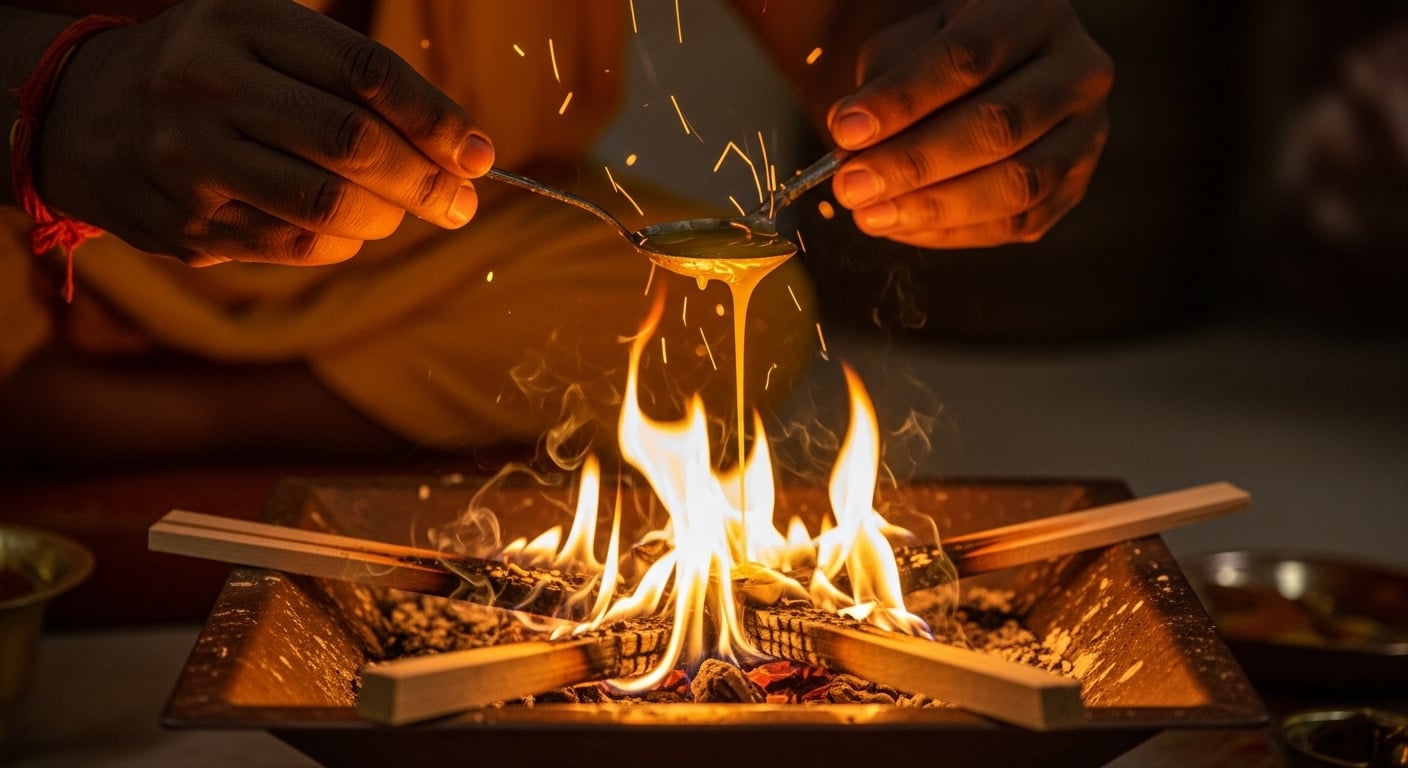
Understand the 16 Hindu sanskars, what each life-stage ritual means, and which ceremonies families most often plan today in Delhi NCR.
Need help planning this ritual? Book a puja or talk to Navdhya.
The 16-sanskars page should not feel like a school summary. Families searching for 16 Hindu Sanskars usually want context: what these rites are, which ones still matter in modern family life, and how milestone ceremonies connect to actual booking decisions. Navdhya uses this page to bridge cultural meaning with practical ceremony awareness.
That matters because users reading about sanskars often move next into specific ceremonies such as Namkaran, Annaprashan, Mundan, Upanayan, wedding rituals, or final rites. A good page therefore needs both cultural clarity and real next-step value.
What the sixteen sanskars represent
The sixteen sanskars are life-cycle rites that frame the spiritual and social journey of a Hindu household from before birth through marriage and later-life obligations. They are not only ritual events. They are cultural markers that help families understand why different ceremonies exist and how those ceremonies connect to values, identity, and community continuity.
Navdhya presents the 16-sanskars framework in practical language because many modern families are not rejecting tradition; they are trying to understand which rites are still actively observed, which ones have evolved, and how to plan the ceremonies they actually want to keep.
Which sanskars modern families still observe most often
In practice, not every family observes all sixteen rites with the same intensity. The most visible modern booking demand tends to cluster around Namkaran, Annaprashan, Mundan, Upanayan in some households, Vivah, Griha Pravesh-adjacent milestone rituals, and funeral or ancestor-related observances. That makes the page more useful when it distinguishes living practice from theoretical lists.
Navdhya can rank better for this topic when the page answers the practical question behind the search: which of these rites should a modern family understand first if they are trying to plan ceremonies meaningfully today.
How the sanskar framework helps ceremony planning
Families often struggle because they encounter ritual names separately and do not see the wider structure. The sanskar framework helps because it shows that child, education, marriage, and later-life rites all sit inside a coherent life-cycle tradition. That context makes each individual ceremony page easier to understand.
Navdhya therefore uses this page as a cluster guide. It gives the cultural overview while pushing users toward the specific pages they actually need to book or study next.
Where confusion usually begins
Confusion often starts when users mix ritual meaning, regional practice, and platform language. Some households know the संस्कार name but not the ceremony steps. Others know the family ritual but not how it is described in modern booking pages. A practical page needs to bridge both worlds.
This is especially valuable in Delhi NCR where users compare educational content, service pages, and family advice in one session. Navdhya improves the page by reducing conceptual confusion and routing people toward applicable ceremony pages.
Which ceremonies families usually open next
After understanding the sanskar framework, most users need to move into a specific milestone page. For family ceremonies that often means Namkaran, Annaprashan, Mundan, wedding rituals, or ancestor-related rites. The next-step path should therefore be explicit rather than hidden inside long explanation.
Navdhya gains topical authority when the page helps users move from broad cultural understanding into the exact milestone or booking support page they need.
Why this page matters for topical authority
The 16-sanskars topic is not only informational. It gives Navdhya a strong foundation for explaining why many separate ritual pages belong to one coherent knowledge system. That supports entity SEO, internal linking, and user trust at the same time.
A better page therefore strengthens both search visibility and cluster quality. It tells search engines that Navdhya understands the whole ritual landscape, not only isolated transactional queries.
Common questions Delhi NCR families ask
Do all Hindu families still observe all sixteen sanskars?
No. Observation varies widely, and many families focus on the rites most relevant to their household, community, and life stage.
Which sanskars are most visible in modern family booking intent?
Child milestone ceremonies, marriage rituals, and certain later-life observances tend to appear most often in active planning and booking behavior.
Why should users read this page before a specific ceremony page?
Because it
How does this page help Navdhya SEO?
It strengthens topical authority and routes broad cultural interest into specific ceremony and service pages.
How Navdhya helps users act on this topic
Families searching for 16 sanskars hinduism guide usually need more than a surface explanation. Navdhya treats this page as practical decision support, which means connecting ritual meaning, planning reality, and the next step a Delhi family can actually take without guesswork.
That approach keeps the page useful for both search and conversion. Navdhya
Best next Navdhya pages after this page
If you are ready to continue, start with main puja booking page and then move into main puja booking page, Baby Naming, Annaprashan, Mundan, Hindu Wedding. Those pages answer the next layer of questions around service fit, locality, pricing, and what the ceremony should look like in practice.
Navdhya uses linked next-step pages deliberately so no page becomes an SEO dead end. The goal is to help the reader move from research into a clearer and more confident booking or preparation decision.
Helpful next steps
Need help planning this ritual? Book a puja or talk to Navdhya.