
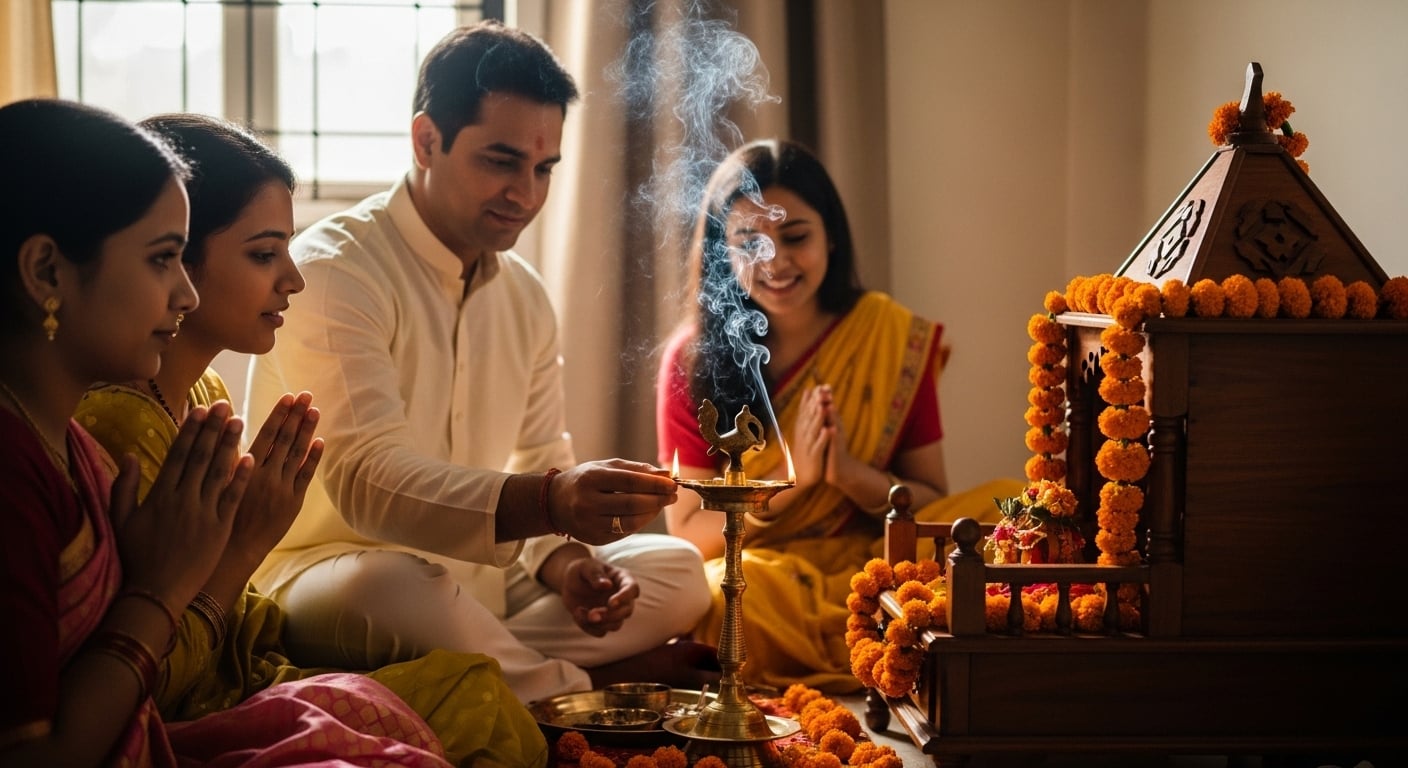
Understand how Navdhya works from inquiry to priest matching, preparation, ceremony delivery, and post-service follow-up.
Want a clearer next step? Learn about Navdhya or speak with our team.
The platform is built to make ritual planning understandable
Many families want authentic ritual support but hesitate because the planning process feels opaque. They are unsure what service to choose, what details matter, and what happens between inquiry and the ceremony day. Navdhya works by turning that uncertainty into a clearer workflow. The platform helps people move from intention to booking with more structure, while still treating the ritual as a sacred event rather than a generic appointment.
The experience is designed to reduce confusion without flattening tradition. That means the process begins with understanding the family's need, not just collecting a date and address. When the booking flow is clearer from the start, the household is able to participate more calmly and the ceremony is better supported overall.
Every booking starts with the ritual context
The first step in how Navdhya works is identifying what the family actually needs. Different ceremonies call for different levels of preparation, different timing considerations, and different types of guidance. A household planning griha pravesh may need practical setup help, while another family may be looking for online participation or a consultation before making a booking decision. The platform begins by clarifying that context.
This matters because good service starts with correct understanding. When the ritual context is captured more clearly, the next parts of the process become more dependable. Families spend less time untangling miscommunication later and more time focusing on what the ceremony requires.
Matching and confirmation are built around fit
After the service need is understood, the process moves into matching and confirmation. This stage is where priest verification, service category, family expectations, and practical constraints come together. Navdhya uses this part of the workflow to reduce mismatch. The goal is not simply to fill a slot quickly. The goal is to make sure the booking is aligned with the ritual and the household.
Clear confirmation also helps the family feel more grounded. Instead of wondering whether assumptions are being made behind the scenes, they have a better sense of what service is being arranged and what the next steps will look like. That visibility is one of the reasons the platform feels more organized than an informal booking chain.
Preparation support is part of the service, not an afterthought
One of the most important stages in how Navdhya works happens before the ritual day. Families often need guidance about timing, setup, materials, and participation. A strong workflow does not leave them to figure that out alone. The platform helps make preparation more legible so the household can get ready with less anxiety and fewer last-minute surprises.
This preparation layer is valuable because it changes the tone of the ceremony itself. A family that understands what to expect usually arrives more calm and more able to focus on the sacred meaning of the event. The service is therefore not only about connecting the household to a priest. It is also about making the path to the ceremony more manageable.
The ceremony day is where planning turns into lived trust
When the ritual day arrives, families want the planning work to disappear into the background. They want the priest to arrive prepared, the family to know how to participate, and the atmosphere to feel respectful rather than rushed. Navdhya works toward that outcome by treating day-of execution as the result of all the earlier steps working properly together.
Good ceremony delivery is not accidental. It depends on accurate understanding, dependable matching, and better preparation. When those pieces are in place, the family experiences the ritual more fully. The day feels less like an exercise in coordination and more like the sacred observance it is meant to be.
Follow-up and continuity matter after the booking too
The process does not end the moment the ceremony concludes. Post-service feedback, continued trust, and the possibility of future bookings all shape the full platform experience. Navdhya uses follow-up to understand how the service felt from the household's point of view and to improve consistency over time. That ongoing loop is one reason the workflow feels more accountable than a one-time referral model.
For many families, the value of the platform becomes clearer over repeated use. A household may book once, return later for another ritual, and gradually build a more stable relationship with the service. That continuity is part of how Navdhya works: not only by enabling one booking, but by helping families sustain ritual life with more clarity over time.
Helpful next steps
Want a clearer next step? Learn about Navdhya or speak with our team.