
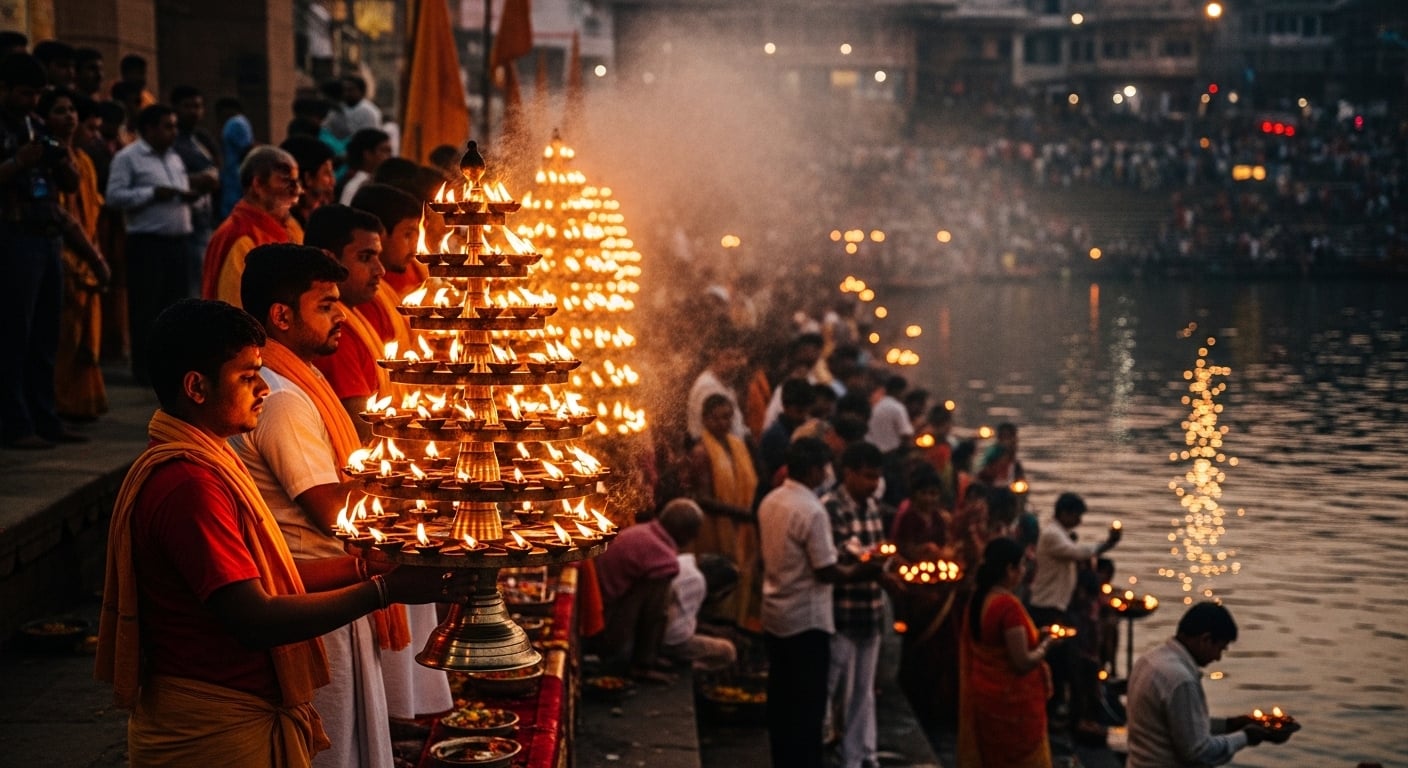
Learn how Durga puja is observed across Navratri, including daily worship rhythm, offerings, and the place of Kanya Puja in the festival.
Planning a seasonal ceremony? Browse Delhi NCR puja services, review related festival guides, or talk to Navdhya for practical support.
Why the Durga puja ceremony holds a special place in festival worship
The Durga puja ceremony is significant because it turns a calendar observance into a disciplined act of devotion. Navdhya Complete ritual guide to Durga puja across the nine days of Navratri including daily offerings and Kanya Puja.
Festival rituals endure because they gather theology, family continuity, and atmosphere into one shared practice. A clearer guide helps readers understand why these observances still feel powerful today.
How families prepare for the observance
Preparation for the Durga puja ceremony often begins with cleaning the space, arranging the altar, gathering the right offerings, and understanding the day or days on which the worship should be centered. Navdhya emphasizes preparation because festival observances become more meaningful when the household knows how to create sacred order rather than approaching the ritual casually.
many households want a clear festival structure so they can maintain continuity across all nine days even with modern work schedules Good preparation protects the devotional mood and helps the family participate more fully even when daily schedules are demanding.
The main ritual sequence across the observance
Most forms of the Durga puja ceremony include ghatasthapana, daily offerings, Durga path or stuti, aarti, ashtami or navami emphasis, and Kanya Puja. These steps create the devotional architecture of the observance. Families invoke, offer, praise, remember, and complete the worship within a rhythm that is both structured and emotionally resonant. Navdhya lays out the sequence so the observance feels coherent instead of fragmented into isolated customs.
That structure matters especially during multi-day festivals, where continuity from one day to the next helps the entire observance feel spiritually cumulative.
Why symbolism and devotion both matter in the festival setting
Festival worship is often visually rich, but the symbolism is not decorative alone. Colors, lamps, flowers, food offerings, recitations, and gestures all help communicate the meaning of the Durga puja ceremony. Navdhya highlights these layers because readers often want to move from familiar appearance to deeper understanding.
Once that symbolic layer is clearer, the observance becomes easier to teach to children and easier to sustain with greater intention across years.
How modern households keep the observance meaningful
Many families today maintain festival worship alongside work, school, travel, and apartment living. Navdhya The aim is not to reduce the observance, but to help households identify the devotional core, preserve the flow, and approach the rite with seriousness even when conditions are not ideal.
This kind of clarity is one reason festival guides remain so useful in digital search. Readers want help translating inherited observance into confident present-day practice.
Why festival ceremony guides still matter
Searches for the Durga puja ceremony often come from readers who already know the festival by name but want to understand its inner order. Navdhya sees that as an opportunity to support devotional continuity. Better explanation helps a family go beyond repetition and into conscious worship.
That is why festival ceremony content deserves depth. It serves not only SEO demand but also the long-term work of making tradition easier to practice with understanding and reverence.
How festival discipline becomes part of household memory
The Durga puja ceremony often leaves a lasting impression because it is tied to repeated seasonal memory. Children remember the lights, songs, offerings, and rhythm of worship long after the day ends. Navdhya sees that memory-making effect as one reason festival observances remain such important entry points into Hindu ritual life.
When the observance is explained with more depth, those memories become even more meaningful. They carry not only atmosphere but understanding, which makes the tradition easier to preserve across generations.
That is also why festival guides deserve real depth. The observance may last a day or a season, but the understanding a family builds during it can shape devotional habits for many years afterward. Families often return to those explanations every season, and each return strengthens both confidence and continuity.
Helpful next steps
Planning a seasonal ceremony? Browse Delhi NCR puja services, review related festival guides, or talk to Navdhya for practical support.