
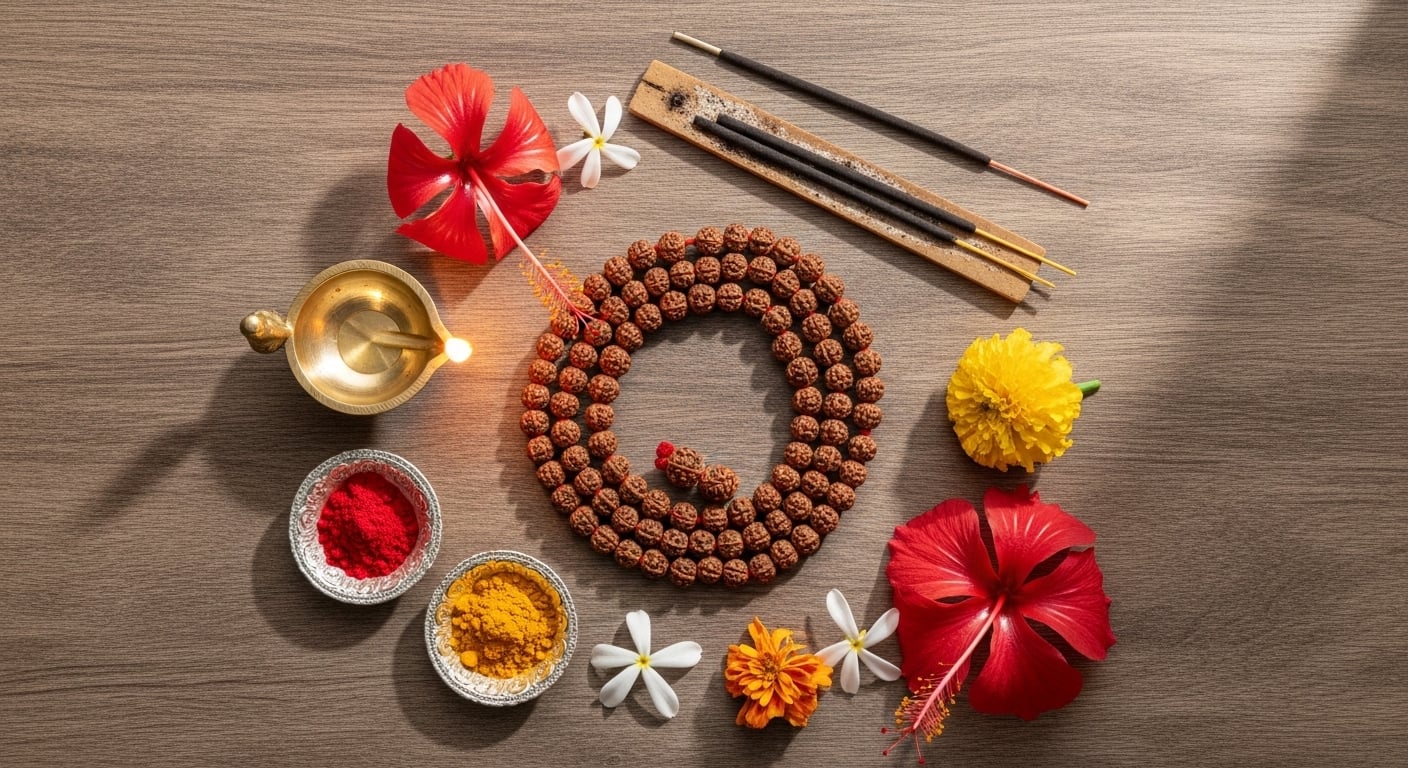
Learn about Shirdi Sai Baba ritual with Navdhya. Overview of the devotional ritual practices associated with Shirdi Sai Baba including kakad aarti and shej...
Need personal guidance? Request a consultation or book a service.
Why Shirdi Sai Baba ritual matters within India's ritual diversity
Shirdi Sai Baba Devotional Rituals matters because Hindu ritual life has never been uniform across the subcontinent. Navdhya Overview of the devotional ritual practices associated with Shirdi Sai Baba including kakad aarti and shej aarti.
This matters for families because what feels normal in one region can look quite different in another while still belonging to recognizable Hindu tradition.
Navdhya therefore treats regional explanation as a way to strengthen both understanding and ritual confidence.
What gives this regional tradition its distinctive character
Shirdi Sai Baba ritual is often associated with Sai Baba worship and Shirdi darshan guide. Navdhya
That grammar may include specific festival emphases, distinctive puja styles, household observances, local temple rhythms, or community-preferred ceremonial forms.
A clearer view of those patterns helps readers understand why regional customs remain so emotionally important.
How family, temple, and local community shape the practice
Regional traditions are usually sustained through a combination of household habit, temple-centered observance, and community repetition. Navdhya
It survives through songs, food, timing, processions, local deities, seasonal observances, and the practical knowledge carried by elders and priests.
That living continuity is one reason regional ritual identity remains so strong across generations.
Where the tradition differs from other Hindu regions
Navdhya highlights comparative differences carefully so readers can see what is structurally distinctive without turning regional identity into a hierarchy. The point is to clarify difference, not rank it.
One region may emphasize temple liturgy, another household vrata, another public festival processions, and another localized deity traditions.
These differences help explain why ceremony planning often requires regional sensitivity rather than one-size-fits-all assumptions.
Why regional awareness matters for modern families
Many urban households now live far from their ancestral region, which makes explanation more important than ever. Navdhya writes these guides so families can preserve regional identity even when the surrounding social environment has changed.
This is especially relevant for weddings, samskaras, annual festivals, and temple-linked observances where family expectations may be deeply regional.
A better explained tradition is easier to carry forward with confidence.
How Navdhya approaches regional ritual authenticity
Navdhya treats regional tradition as a real part of ritual authenticity, not a decorative add-on. Families often need ceremonies that feel recognizably their own, and that requires attention to language, sequence, priest fit, and inherited custom.
That is why pages like this connect cultural explanation to practical ritual planning rather than leaving the topic at the level of folklore.
The stronger the regional understanding, the easier it becomes to preserve continuity without confusion.
How better preparation changes the experience of Shirdi Sai Baba ritual
Families often discover that the quality of Shirdi Sai Baba ritual depends as much on preparation as on the ritual day itself. Navdhya therefore emphasizes material clarity, role clarity, and sequence clarity because these are the foundations of a calmer observance.
When preparation improves, participation usually improves as well. Elders can guide more comfortably, younger relatives can follow more easily, and the ceremony feels more intentional from beginning to end.
That practical improvement is one reason strong ritual content continues to matter. It changes the lived experience of the ceremony, not just the reader's abstract understanding.
Why Navdhya keeps building detailed guidance on Shirdi Sai Baba ritual
Navdhya continues to invest in detailed pages like this because families search for more than a definition. They want trustworthy explanation, usable structure, and a better sense of how tradition can be practiced well today.
That kind of guidance supports both confidence and continuity. It helps the household prepare well now and preserve the knowledge for later use.
In that sense, educational content around Shirdi Sai Baba ritual is part of how Navdhya helps ritual life remain active, meaningful, and easier to carry across generations.
Helpful next steps
Need personal guidance? Request a consultation or book a service.