
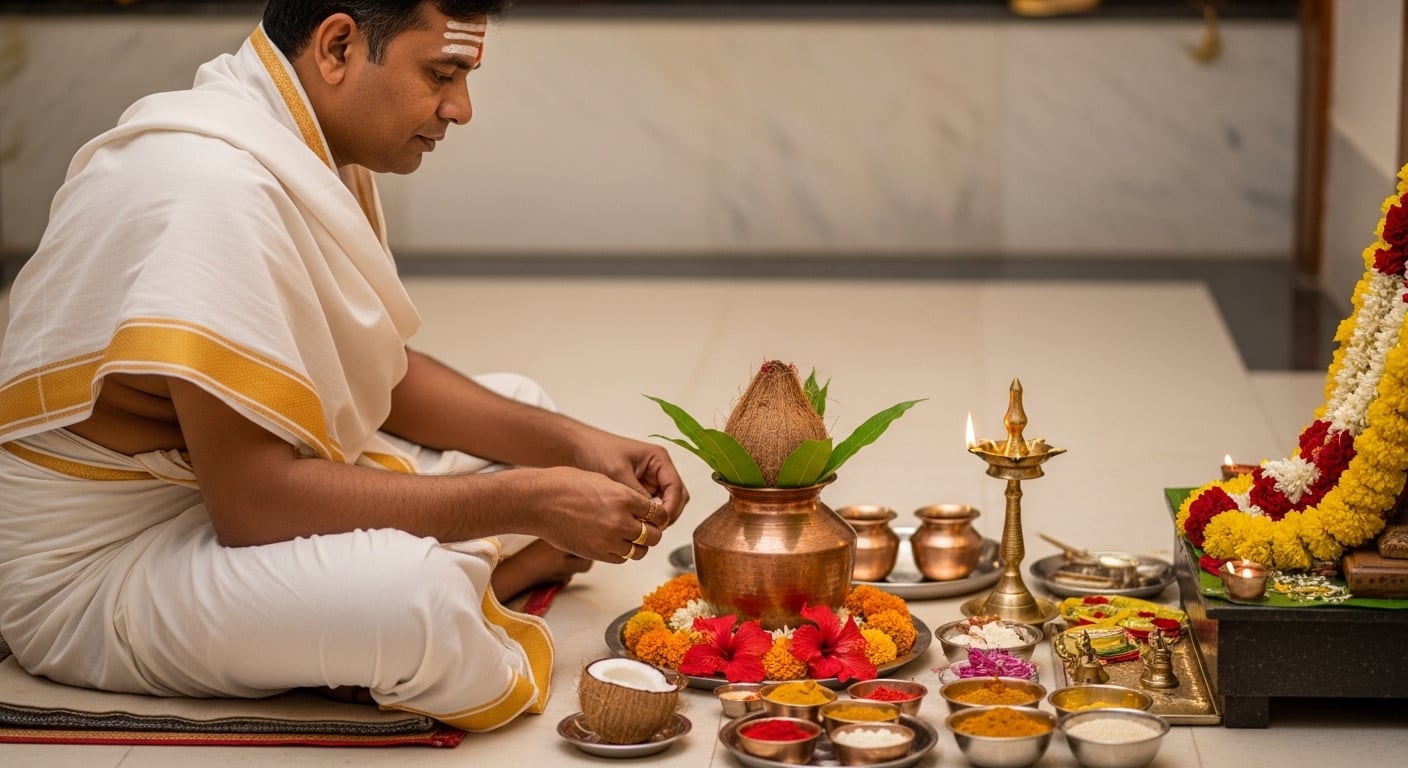
Explore how Navdhya approaches expansion, stronger service systems, and the long-term growth of its ritual and spiritual services platform.
Want a clearer next step? Learn about Navdhya or speak with our team.
Growth matters only if service quality grows with it
Expansion can sound impressive in almost any industry, but in spiritual services it carries a special responsibility. A platform should not grow faster than its ability to preserve trust, ritual seriousness, and service consistency. Navdhya growth plans therefore have to be understood as more than a map of future reach. They reflect a question about how the platform can scale without becoming thinner, less reliable, or less respectful of the sacred moments families are entrusting to it.
That makes growth a quality conversation as much as a business conversation. Families may be interested in expansion because they want broader access, but they also want assurance that expansion will not dilute the experience. The strongest growth path is one where service systems, priest standards, and customer support become stronger as reach increases.
Expansion begins with strengthening the existing foundation
The most credible growth strategy usually starts with operational depth rather than only geographical ambition. Navdhya can scale responsibly when booking clarity, priest verification, support workflows, and customer experience become more disciplined over time. A stronger foundation makes broader reach more believable because it shows the platform is improving from the inside, not merely speaking about future availability.
This matters because ritual services are not easy to standardize in a careless way. Every home, ceremony, and family situation brings variation. Growth therefore depends on building better systems for understanding those differences while still keeping the service coherent. The platform's long-term value will depend heavily on how well it handles that balance.
Service breadth is part of the expansion story too
Growth is not only about adding more places. It is also about deepening the range of needs the platform can support well. Navdhya expansion includes the logic of broader service breadth: stronger home ritual support, more refined online participation experiences, richer consultation flows, and clearer pathways for households that want ongoing spiritual guidance rather than one isolated booking.
This kind of growth can be especially meaningful because it strengthens family continuity. A household that begins with one service may later need another, and the platform becomes more useful when it can support that broader journey responsibly. Expansion then becomes a way of deepening relevance rather than simply widening exposure.
Scalability depends on systems, not just intention
A spiritually serious platform still needs operational discipline. Scalability depends on systems that support matching, communication, follow-up, and quality assurance across more volume and more complexity. Navdhya growth plans are strongest when they are grounded in that operational reality. Expansion becomes credible when the platform can show that its service systems are being built to handle more households without losing clarity.
In other words, growth should feel controlled. Families should sense that the platform is becoming more capable, not merely more promotional. That capability is usually visible in better process, more dependable support, and clearer service expectations across the booking journey.
Pan-India ambition needs local credibility at every stage
The platform already speaks to a wider ambition beyond its current core operating footprint. That direction matters because families outside Delhi NCR are also looking for more trustworthy ritual access. At the same time, pan-India growth only becomes meaningful when each step retains local credibility. Expansion should feel like a responsible broadening of service capacity, not a vague national claim with little support behind it.
This is why directional roadmap language matters more than inflated promises. Families appreciate honesty about where the platform is now and where it is heading. A credible growth story leaves space for operational realities while still showing that the vision is larger than the current footprint.
Why Navdhya growth plans matter to families and partners
Families care about growth because it signals continuity. A platform with long-term plans is more likely to keep improving, add useful services, and remain available for future milestones. Priests and partners may care because growth can create a more stable and better-organized service environment. In both cases, the value lies in the possibility of sustained trust over time.
That is why Navdhya growth plans should be read as a long-term service commitment. The aim is to expand access, add new capabilities, and strengthen systems without losing the seriousness that made the service useful in the first place. For households considering the platform, that kind of measured ambition can be a positive sign of where the experience is headed.
Helpful next steps
Want a clearer next step? Learn about Navdhya or speak with our team.