
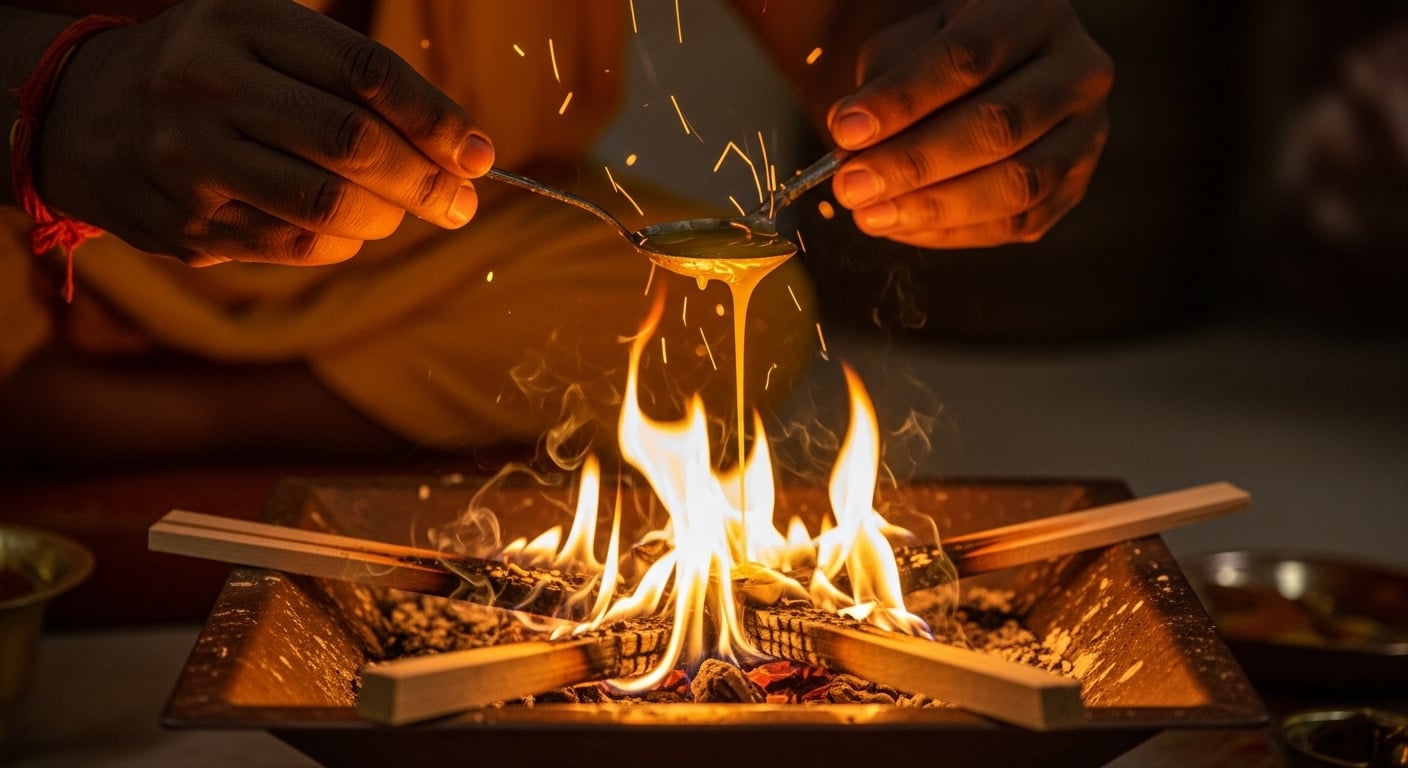
Learn the meaning of the mundan ceremony, auspicious timing, and how Chudakarana is prepared and performed in Hindu family tradition.
Need help planning this ritual? Book a puja or talk to Navdhya.
Why the mundan ceremony matters within the samskara tradition
The mundan ceremony belongs to a wider Hindu understanding of life-stage rites in which important transitions are marked with blessing, structure, and sacred intention. Navdhya
When readers understand the ceremony as part of a larger life journey, the ritual feels more coherent. It becomes a way of welcoming change responsibly rather than simply observing an inherited family habit.
How families usually prepare for the ceremony
Preparation for the mundan ceremony often begins with questions about timing, the role of the priest, the comfort of the child or participant, and the basic flow of the ritual. Navdhya addresses these practical questions because life-stage ceremonies are often deeply emotional for families and need a calmer planning path. A clearer outline reduces anxiety and helps the rite feel more intentional.
families today often want clarity on timing, the child's comfort, and whether the ceremony should happen at home, temple, or pilgrimage site That modern context does not reduce the seriousness of the ceremony. It simply changes the practical factors the family needs to account for while preserving the ritual center.
The major actions that shape the rite
In most forms of the mundan ceremony, the ceremony includes muhurta selection, sankalpa, child blessing, first hair removal, prayers for wellbeing, and daan and family blessings. These actions create the visible structure of the rite, but their importance lies in what they signify: blessing, transition, purification, or intentional entry into a new stage of life. Navdhya
Many samskaras are remembered most vividly because of one visible act, yet the surrounding prayers and blessings matter just as much. They place the visible moment inside a larger spiritual frame.
Why timing, blessing, and family participation all matter
A samskara is rarely a private action carried out in isolation. Elders, parents, relatives, and the officiating priest often help create the emotional and ritual texture of the event. Navdhya highlights this because the rite is not only about the individual participant. It is also about how the family acknowledges a new stage with shared responsibility and blessing.
That shared participation is one reason these ceremonies remain so meaningful. They allow households to translate affection, duty, and prayer into a visible act of support.
How traditional meaning stays relevant in modern family life
Many readers search for the mundan ceremony because they want to understand how an old rite still belongs in contemporary life. Navdhya approaches that question directly. The ceremony remains relevant not because every family performs it in exactly the same way, but because it gives form to values families still care about: blessing, continuity, gratitude, and mindful transition.
That is especially true for urban families trying to preserve meaningful observance while working within smaller households, tighter schedules, or geographically dispersed relatives.
Why clearer explanation helps families honor the rite well
Good ceremony guidance does not replace tradition. It helps families approach tradition with more confidence. Navdhya sees educational pages on the mundan ceremony as part of that support system. When the meaning, sequence, and intention are clearer, families participate more intentionally and the ceremony is easier to remember for the right reasons.
In that sense, explanation is itself a form of care. It allows a life-stage ritual to remain dignified, accessible, and spiritually intelligible across generations.
How these rites strengthen continuity across generations
The mundan ceremony also matters because it creates a teachable family memory. Younger relatives watch the rite, elders explain its purpose, and the household gains a shared reference point for future observance. Navdhya sees this intergenerational effect as one of the strongest reasons samskaras continue to matter in urban and modern contexts.
When a life-stage ceremony is explained well, it becomes easier for the family to preserve not only the event itself but also the values attached to it. That continuity is part of what makes samskara literature and ceremony guides so valuable over time.
Helpful next steps
Need help planning this ritual? Book a puja or talk to Navdhya.