
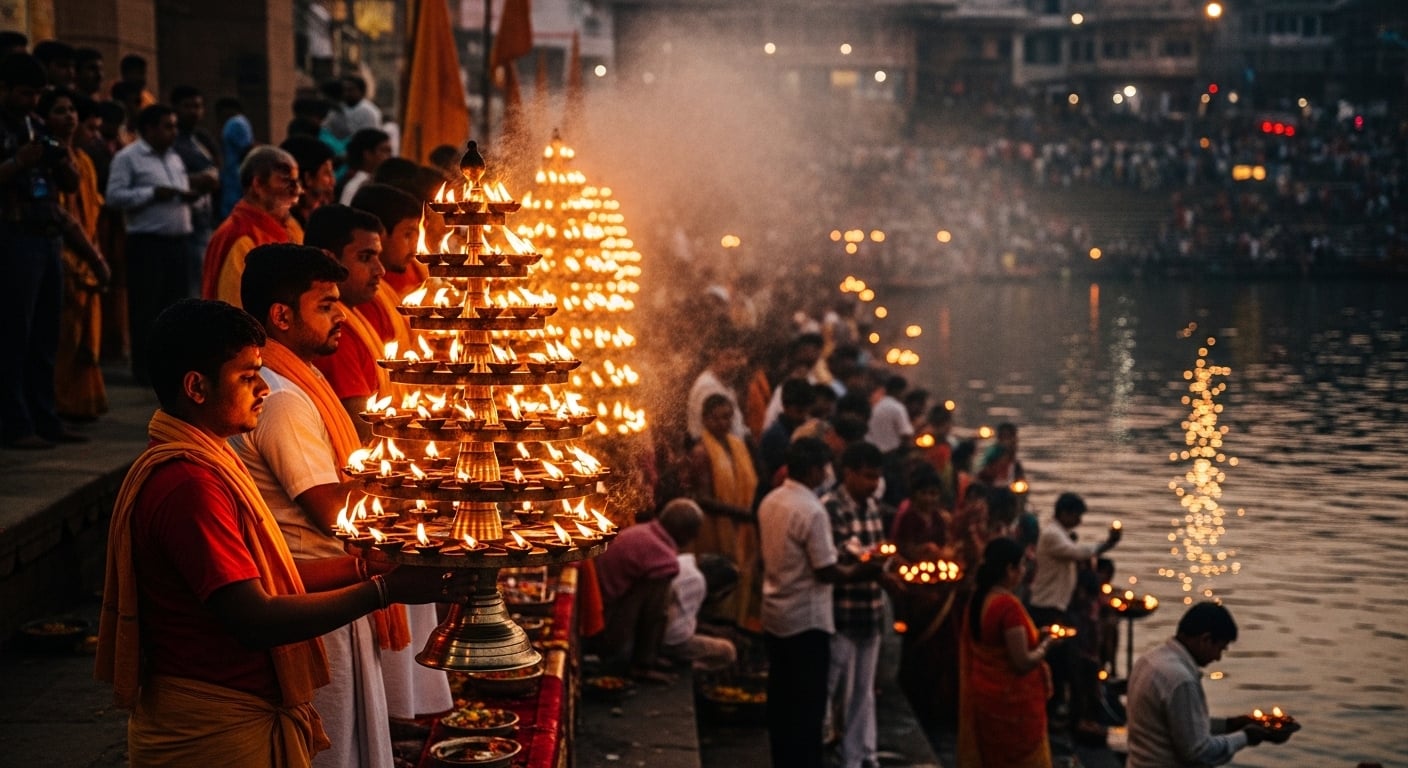
Follow a clear Satyanarayan puja guide covering preparation, katha reading, offerings, and prasad distribution with help from Navdhya.
Need help planning this ritual? Book a puja or talk to Navdhya.
Why families look for a clear Satyanarayan puja guide
Families usually search for a Satyanarayan puja guide because they want more than a list of items. They want a sequence they can follow with confidence and a devotional logic that helps the ceremony feel spiritually complete. Navdhya Comprehensive how-to for performing Satyanarayan puja including materials, katha reading, and prasad distribution.
That guidance matters because even well-known household pujas can feel uncertain when materials, recitation order, and family participation are not clearly organized in advance.
What to prepare before the puja begins
A strong Satyanarayan puja guide begins with preparation of the place, the altar, and the core materials. Families usually gather the deity image, kalash or puja setup items, flowers, fruits, prasad ingredients, lamps, and any text needed for recitation. Navdhya emphasizes this stage because a calm start makes the rest of the ritual easier to follow.
families often want a practical step-by-step guide that helps them organize materials and follow the sequence with less uncertainty Good preparation also helps the family keep the focus on devotion instead of scrambling for missing items in the middle of the puja.
The main sequence of the observance
In most homes, the Satyanarayan puja guide includes space preparation, Kalash setup, Ganesh invocation, Satyanarayan katha, naivedya and aarti, and prasadam distribution. The exact detail can vary, but the broader sequence remains stable: prepare, invoke, offer, recite, complete, and share the blessing. Navdhya lays out this sequence clearly so first-time or returning worshippers can understand not just what to do, but why the order matters.
When the sequence is clearer, the puja feels far more participatory. Family members know when to join, when to listen, and how the devotional flow is unfolding.
Why katha, offering, and prasad are all essential parts of the rite
The Satyanarayan puja guide is meaningful because it combines hearing, offering, and shared blessing. The recitation carries the narrative and devotional teaching of the observance, while naivedya and aarti complete the offering side of worship. Navdhya
Prasad distribution is especially important because it extends the puja into shared family experience. The ritual does not end with recitation alone; it concludes through gratitude and distribution of blessed food.
How families adapt the puja to modern household life
Many families perform the Satyanarayan puja guide in apartments, compact homes, or busy urban schedules. Navdhya addresses that reality by focusing on sequence, understanding, and respectful preparation rather than assuming a large traditional setup. What matters most is not scale, but sincerity, clarity, and orderly observance.
This approach helps households keep the puja meaningful even when time, space, or ritual familiarity are limited. Good guidance reduces hesitation and makes the observance easier to repeat over time.
Why a step-by-step guide remains valuable
A detailed Satyanarayan puja guide remains valuable because readers often want confidence before they begin. They want to know the order, the materials, and the devotional purpose of each phase. Navdhya provides that clarity so the rite can be performed with more steadiness and less uncertainty.
That is also why how-to content matters for search and for practice. The search itself reflects a sincere wish to perform the ritual properly, and a well-structured guide helps turn that wish into a more grounded observance.
How repeated observance becomes easier over time
Once a family understands the Satyanarayan puja guide clearly, repeated observance usually becomes much easier. Materials can be gathered more confidently, the altar can be arranged more calmly, and the family can focus more on devotion than uncertainty. Navdhya includes this practical perspective because many households are not just preparing for one puja; they are building repeatable confidence for future observances as well.
That repeatability is an important part of ritual continuity. A clear guide helps the first observance happen well, but it also helps the household preserve the practice with far less hesitation in the future.
Helpful next steps
Need help planning this ritual? Book a puja or talk to Navdhya.