
Understand why Ganesh puja opens so many Hindu ceremonies and how the ritual is prepared, offered, and completed with clarity.
Need help planning this ritual? Book a puja or talk to Navdhya.
Why the Ganesh puja remains spiritually important
The Ganesh puja continues to matter because it gives households a structured way to express devotion, gratitude, and sacred attention. Navdhya Explanation of Ganesh puja as an auspicious opener for all Hindu ceremonies and how it is correctly performed.
For many households, the ceremony is familiar in name but not always in sequence. A clear guide makes it easier to connect repeated family practice with the deeper logic of worship.
How the ceremony is usually prepared
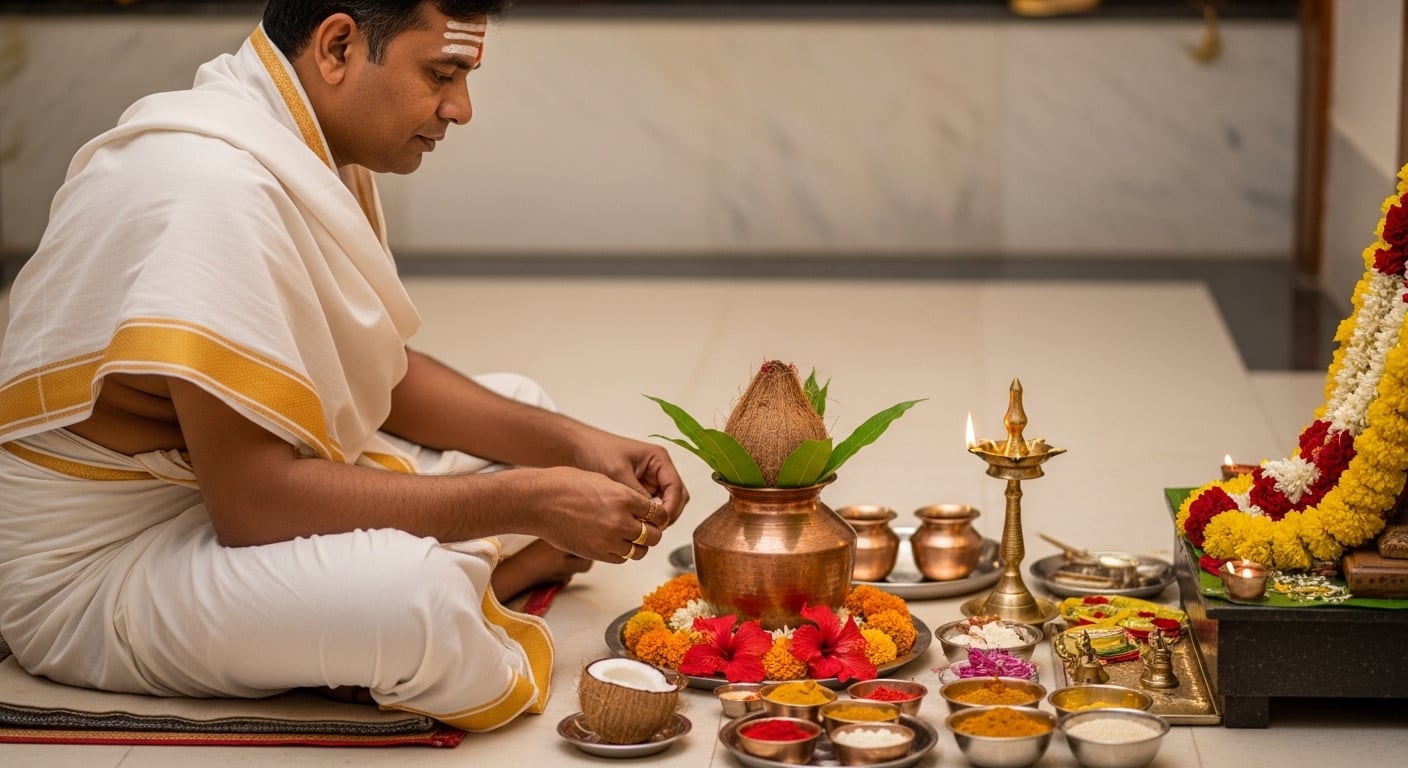
Every successful Ganesh puja begins with thoughtful preparation. Families usually consider the altar, the materials, the order of offerings, and who will lead or participate in the rite. Navdhya emphasizes this preparation stage because ritual confidence starts before the first mantra is recited. Good preparation helps worship feel calm instead of improvised.
because Ganesh puja appears in so many settings, families benefit from understanding both its independent form and its role as an opening invocation A better prepared ceremony usually feels both more reverent and more intelligible to the whole family.
The central sequence of offerings and prayer
Most forms of the Ganesh puja include altar preparation, avahana, durva and modak offerings, mantra recitation, aarti, and completion before main ritual. These actions work together to create a devotional progression. The worshipper prepares the space, invokes divine presence, makes offerings, and completes the rite through prayer, aarti, or prasadam. Navdhya
Even when households simplify the ceremony, the inner pattern remains recognizable. Intention, invocation, offering, praise, and completion all continue to matter.
Why symbolism matters as much as visible action
One reason the Ganesh puja endures is that it speaks through symbol as well as procedure. Lamps, flowers, grains, leaves, sweets, water, incense, or specific deity-associated items all carry meaning. Navdhya
This symbolic layer also helps younger participants connect to the ceremony. They are more likely to remember the rite when they understand why each act is performed rather than simply copying movement.
How households adapt the ceremony without losing its core
No two homes conduct the Ganesh puja in exactly the same way. Regional custom, family tradition, available space, and level of ritual familiarity all shape the visible form. Navdhya What matters most is that the worship remains sincere, orderly, and grounded in understanding.
That flexibility is especially helpful for city households, nuclear families, or people returning to ritual life after a long gap. They often need guidance that is faithful without being intimidating.
Why readers search for this ceremony today
People search for the Ganesh puja because they want more than a short list of materials. They want to know what the ceremony means, how it unfolds, and how to participate with confidence. Navdhya treats that search intent seriously because good explanation can transform worship from routine into conscious devotional practice.
That is why long-form ceremony pages matter. They help families recover the inner structure of worship and give ritual continuity a stronger place in contemporary life.
What deeper understanding changes in actual worship
When a family understands the Ganesh puja more clearly, the worship experience often changes in tone. Participation becomes steadier, offerings feel less mechanical, and children or first-time participants have a better chance of understanding what they are witnessing. Navdhya sees that practical gain as one of the strongest reasons devotional education matters.
A more informed ritual does not have to become complicated. It simply becomes more conscious. That shift from habit to understanding can make even a familiar puja feel renewed and spiritually focused.
It also helps households sustain consistency. When the rite is understood better, the family is more likely to repeat it with care, explain it well to younger members, and preserve a devotional atmosphere that feels intentional rather than improvised.
Helpful next steps
Need help planning this ritual? Book a puja or talk to Navdhya.