
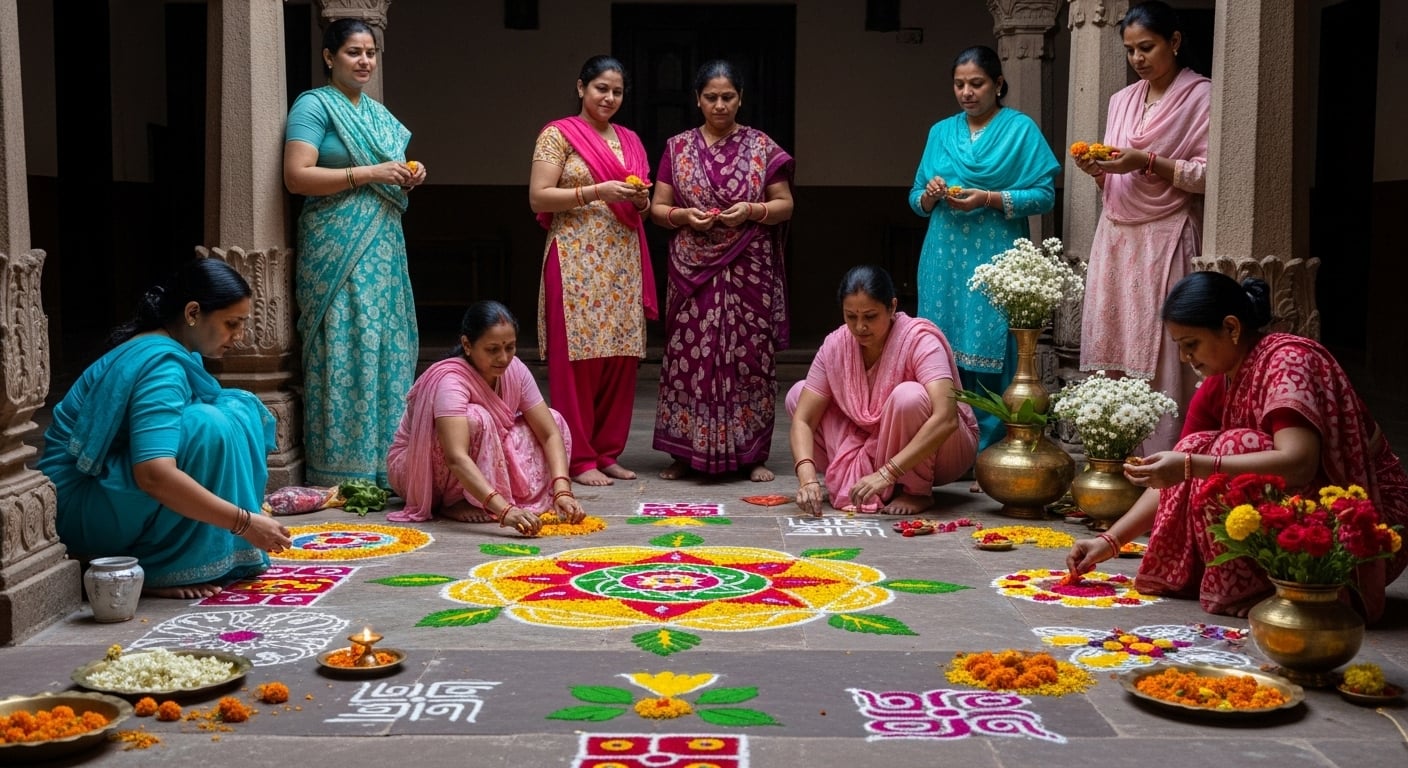
Learn about puja samagri with Navdhya. Comprehensive checklist of all items required for a standard home puja including flowers, incense, lamps, and...
Need help planning this ritual? Book a puja or talk to Navdhya.
Why puja samagri preparation affects the quality of puja
Puja Samagri Complete Checklist matters because many pujas feel difficult only when the material side is disorganized. Navdhya Comprehensive checklist of all items required for a standard home puja including flowers, incense, lamps, and offerings.
Good preparation does not make devotion mechanical. It makes devotion calmer and more intentional.
That is why Navdhya treats ritual materials as part of ceremony readiness rather than as an afterthought.
Which items are usually essential and why
puja samagri commonly includes materials linked with ritual materials list, puja items required, and home puja essentials. Navdhya
Some items support invocation, some support offering, some support aarti, and others shape the devotional atmosphere of the ritual space.
Understanding the role of each item makes it much easier to prepare well and substitute thoughtfully when needed.
How requirements change by deity, occasion, or household custom
Not every puja requires the exact same material list. Navdhya highlights this because readers often search for a universal checklist when the real answer depends on deity, vrata, family tradition, and ceremony scale.
A household Lakshmi puja, Ganesh puja, havan, or griha pravesh may overlap in materials while still differing in emphasis.
That nuance helps families avoid both overbuying and underpreparing.
How to organise, store, and present the materials
Material readiness is not only about buying the right things. Navdhya also encourages families to clean, sort, and place items thoughtfully so the sequence can flow without interruption.
Flowers, lamps, liquids, grains, cloth, and prasad ingredients are all easier to handle when the arrangement is done in advance.
A well-organised setup also makes it easier for children and other relatives to participate confidently.
Common checklist mistakes families make
The most common mistakes include forgetting the basic lamp setup, missing a clean offering cloth, confusing naivedya with decorative items, or not preparing the vessels needed during the main sequence. Navdhya addresses these issues because they are highly avoidable.
A simple checklist used well usually supports the ritual much better than a long and poorly understood shopping list.
That is one reason detailed preparation content performs so well: it solves practical stress at exactly the point families need clarity.
How Navdhya helps families source and prepare well
Navdhya connects material readiness with better ritual outcomes. The clearer the checklist, the smoother the ceremony, the better the family experience, and the easier it becomes to repeat the observance correctly next time.
That support can include educational guidance, service coordination, or a clearer understanding of what belongs to a simple home puja versus a larger ceremony.
In all cases, Navdhya treats preparation as a meaningful part of the devotional process rather than as background logistics.
How better preparation changes the experience of puja samagri
Families often discover that the quality of puja samagri depends as much on preparation as on the ritual day itself. Navdhya therefore emphasizes material clarity, role clarity, and sequence clarity because these are the foundations of a calmer observance.
When preparation improves, participation usually improves as well. Elders can guide more comfortably, younger relatives can follow more easily, and the ceremony feels more intentional from beginning to end.
That practical improvement is one reason strong ritual content continues to matter. It changes the lived experience of the ceremony, not just the reader's abstract understanding.
Why Navdhya keeps building detailed guidance on puja samagri
Navdhya continues to invest in detailed pages like this because families search for more than a definition. They want trustworthy explanation, usable structure, and a better sense of how tradition can be practiced well today.
That kind of guidance supports both confidence and continuity. It helps the household prepare well now and preserve the knowledge for later use.
In that sense, educational content around puja samagri is part of how Navdhya helps ritual life remain active, meaningful, and easier to carry across generations.
Helpful next steps
Need help planning this ritual? Book a puja or talk to Navdhya.